Electronic data capture that sites actually like using
- Drag-and-drop eCRF builder
- Edit checks and derived variables
- Randomisation and stratification
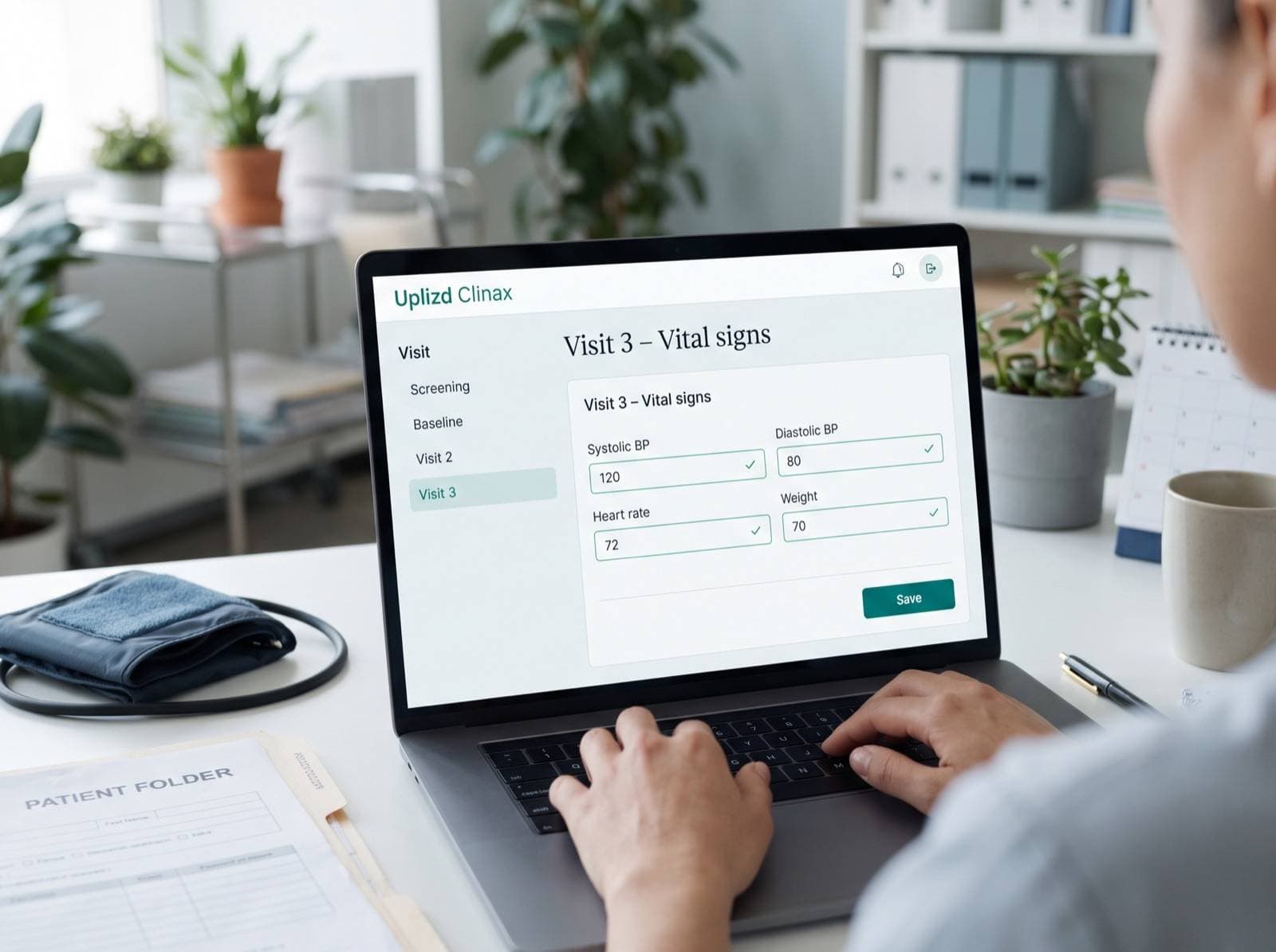
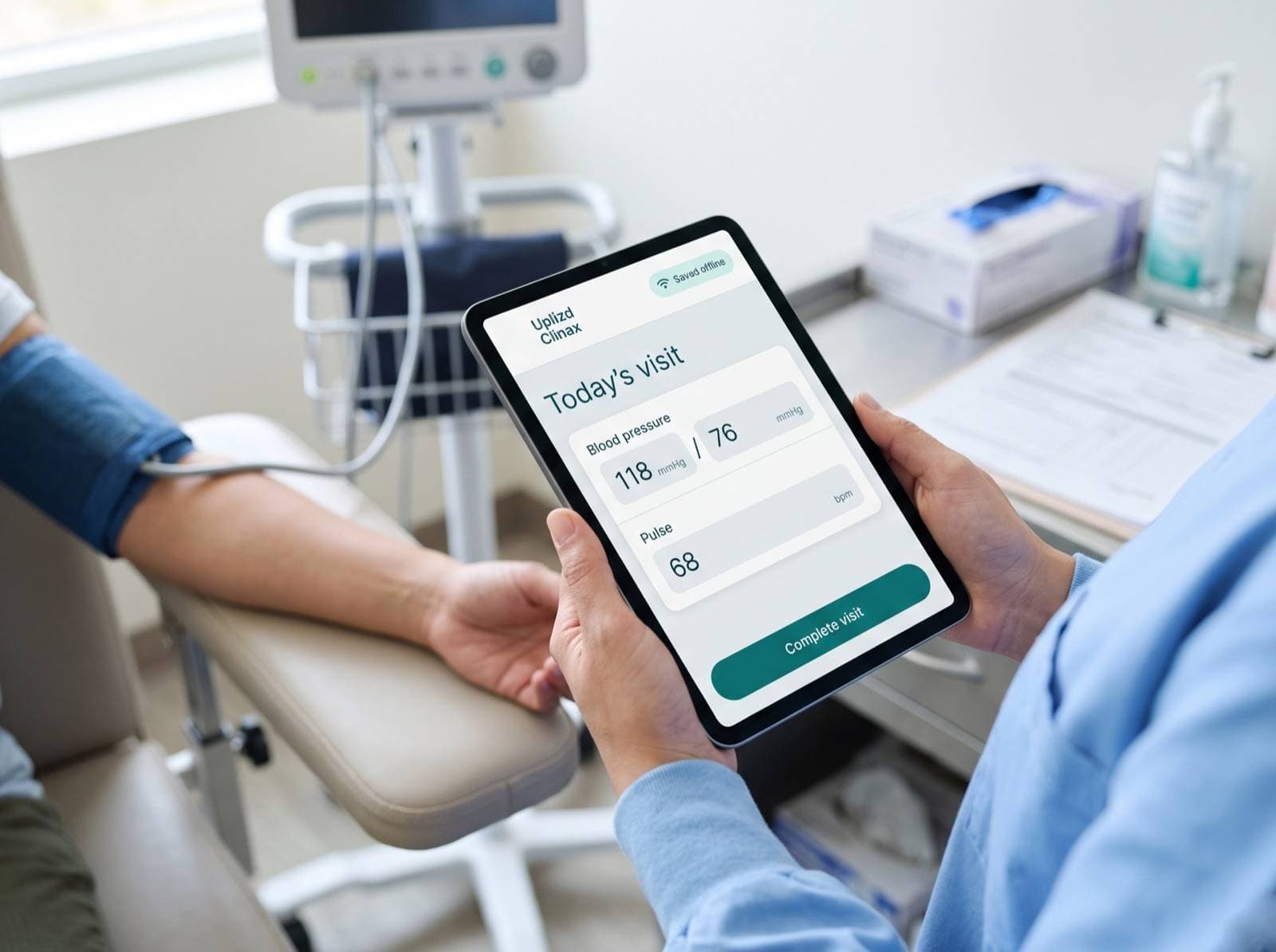
Designed with sites, not just for sponsors
- Clean, keyboard-friendly forms on any modern browser
- Open queries shown next to the field they belong to
- One sign-in across EDC, eCOA and eConsent
- A clear to-do list per site: missing forms, open queries, items to sign
Everything you need to capture clean data
Build the study the way the protocol reads
Lay out visits, windows and forms on a schedule, then assemble each form from a reusable field library. Preview every page as a site user would see it, and test the whole build in a sandbox with dummy data before anything goes live.
- Visit schedules with windows and unscheduled visits
- Reusable form and field library across studies
- Skip logic, repeating groups and calculated fields
- Separate test environment for user acceptance testing
Catch problems while the participant is still in the room
Checks run as data is entered, so a typo or an out-of-range value is fixed at the site in seconds instead of coming back as a query weeks later. Monitors and data managers raise and answer queries right on the field.
- Range, required-field and cross-form checks
- Derived values such as age or BMI calculated for you
- Queries raised, answered and closed in context
- Source data verification and review status per field
Randomise inside the study, not in a separate system
Configure the randomisation scheme in the same build as the eCRF. Allocation happens at the moment of enrolment, blinding follows each user's role, and every unblinding is recorded with who, when and why.
- Block, stratified and minimisation methods
- Blinded and unblinded roles
- Emergency unblinding with a full audit record
- Upload your own list or generate one in the study
Change the protocol without stopping the study
Amendments are a fact of clinical research. Forms are versioned, so you can publish a change, roll it out site by site as approvals arrive, and keep every earlier version — and the data entered against it — intact.
- Versioned forms with effective dates
- Site-by-site roll-out after ethics approval
- Choose which existing records move to the new version
- Complete history of every published version
Get data in and out without re-keying it
Lab results, device readings and data from other systems arrive in the subject record through file imports or the API, instead of being typed in again. When the study is done, export analysis-ready data in the format your statisticians use.
- Central lab, device and wearable file imports
- EHR connections over FHIR R4 and HL7 v2
- REST API for your own systems
- Exports for statistical analysis, with full metadata
From protocol to first patient in
- 1Study team
Design
Turn the protocol into visits and eCRFs using templates and the form library.
- 2Study team
Validate
Test edit checks and workflows in the sandbox, then sign off the build.
- 3Sites
Go live
Invite sites, train users in minutes and start enrolling participants.
- 4Data management
Lock
Resolve queries, freeze forms and export analysis-ready data.
EDC at a glance
- Study types
- Interventional, observational, registries and post-market studies
- Randomisation
- Block, stratified and minimisation, with role-based blinding
- Data entry
- Any modern browser, no installation; keyboard-friendly forms
- Data in
- Lab, device and wearable file imports; FHIR R4 and HL7 v2; REST API
- Data out
- Analysis-ready exports with metadata and the full audit trail
- Access
- Role-based permissions per study, site and role; single sign-on
- Signatures
- Electronic signatures designed to support 21 CFR Part 11
- Hosting
- Managed cloud, your private cloud, or on-premises
Built for regulated research
21 CFR Part 11
US FDA — electronic records and signatures
Every create, change and delete is recorded with user, time and reason, and electronic signatures are bound to the person who signed.
EU GMP Annex 11
EU — computerised systems
Study builds are tested in a separate environment and released through documented change control, so every version can be traced.
ICH E6(R3)
Good Clinical Practice
Risk-proportionate data review, with clear oversight of who entered, changed, reviewed and approved each value.
ALCOA+
Data integrity principles
Data that is attributable, legible, contemporaneous, original and accurate — and complete, consistent, enduring and available.
Frequently asked questions
How long does a typical study build take?
Simple studies can be built in days using the form library; complex multi-arm protocols take longer. Our services team can also build and validate the study for you.
Can we change the eCRF after go-live?
Yes. Forms are versioned, so you can publish protocol amendments mid-study while existing data and its audit trail stay intact.
Does EDC work with the other Uplizd Clinax modules?
All modules share one data model, so eCOA responses, consent status and AI-extracted values appear in the same subject record.
How much training do site users need?
Most coordinators are entering data after a short walkthrough. Forms behave like ordinary web forms, and each site sees a clear list of what needs doing next.
How is the system validated?
The platform is released under documented change control, and each study build is tested in a separate environment before go-live. Validation documentation is shared during evaluation.
Where is our data hosted?
You can run in our managed cloud, in your own private cloud, or on-premises. The product and its controls are the same wherever it runs.
Works together with
eCOA / ePRO
Electronic Clinical Outcome Assessments
Replace paper diaries with questionnaires participants complete on any device, with reminders and compliance tracking built in.
Learn moreeConsent
Electronic Informed Consent
Recruit, screen and consent participants remotely, with comprehension checks and a complete audit trail for every signature.
Learn moreCDMS
Clinical Data Management
Queries, medical coding, source data verification and lock workflows that keep data managers in control of every study.
Learn moreAI Data Extraction
Source-to-eCRF with human review
AI reads source documents and EHR exports and proposes structured eCRF values. A reviewer approves each one before it is committed.
Learn more