A validated study build, ready to go live
- eCRF and visit design
- Edit checks and derivations
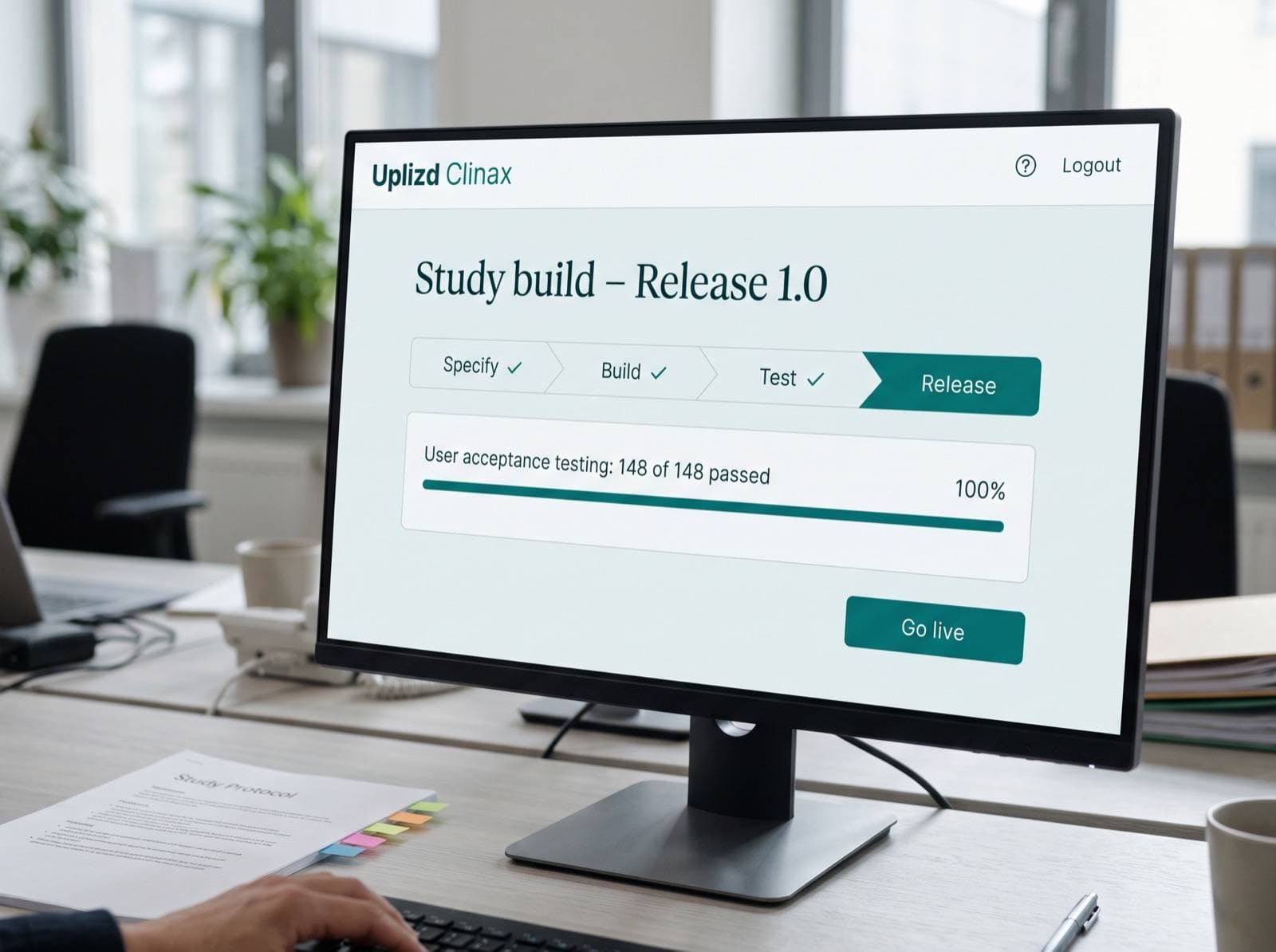
- User acceptance testing
Why teams bring in a build partner
- 01
The protocol leaves room for interpretation
Visit windows, derived values and conditional forms are often described in a sentence or two. Turning them into exact rules takes people who have done it many times.
- 02
Testing gets squeezed
When a build runs late, testing is the first thing to shrink. Problems then surface at sites, after real data has been entered.
- 03
Inspectors ask for evidence, not assurances
Auditors expect to see the specification, the test records and who approved the release. Recreating that afterwards is slow and rarely convincing.
- 04
Amendments don't wait
Protocol amendments arrive mid-study and need to reach sites quickly. Each change needs the same care as the first build.
Specified, tested and documented
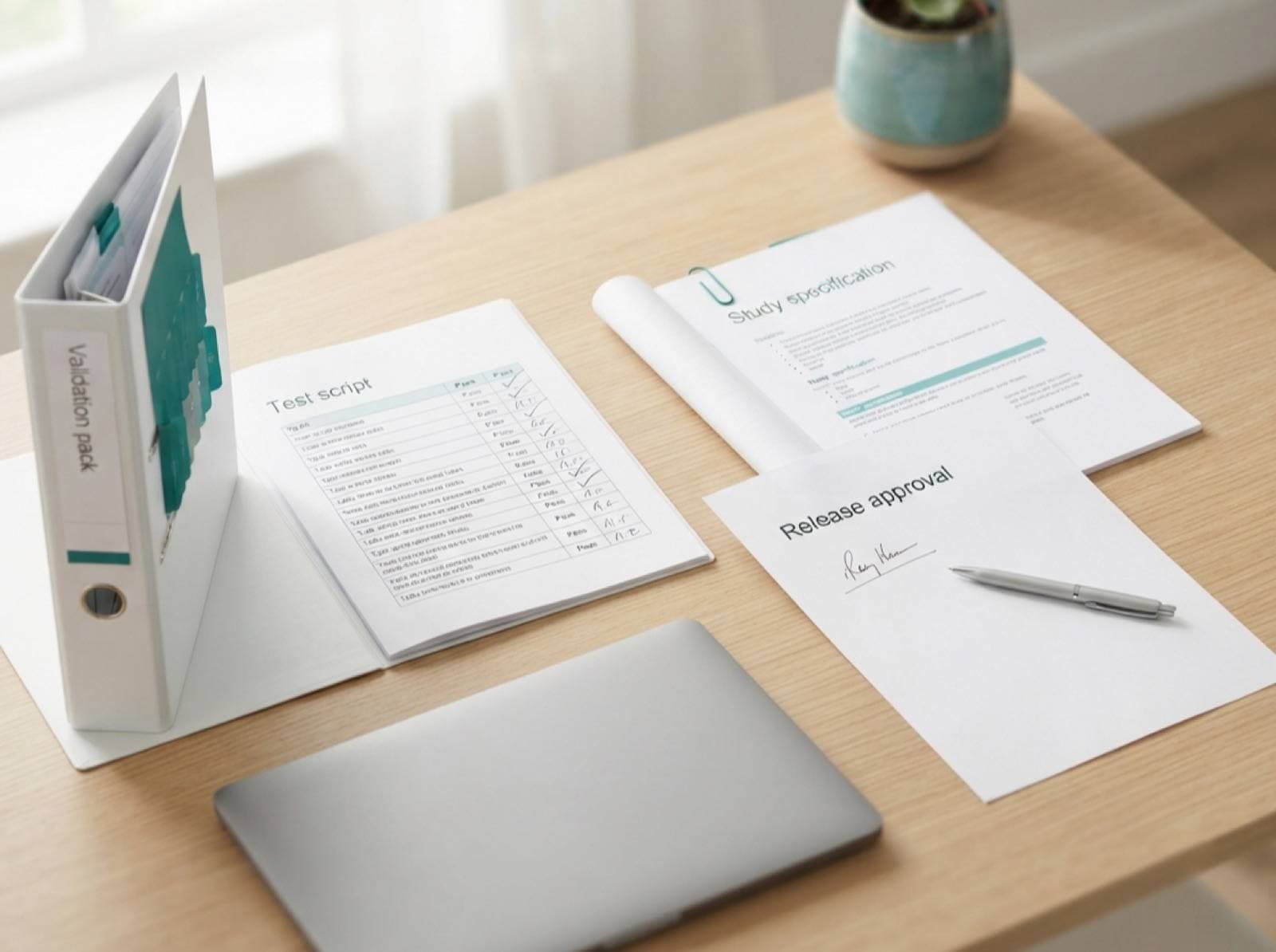
- Reviewed build specification
- Scripted testing in a separate test environment
- Validation documentation at release
- Versioned forms for every amendment
What's included
What we take on
- Build specification from your protocol
- eCRF, visit schedule and form design
- Edit checks, derivations and conditional logic
- Roles, permissions and site set-up
- Scripted testing in a separate test environment
- Amendments through the same process
What you receive
- Approved build specification
- Test scripts and executed test records
- Issue log with every finding and its fix
- Release record with sign-off
- Reusable form library for later studies
- Training for site and sponsor users
What stays with you
- The protocol and any clarifications
- Review and approval of the specification
- User acceptance testing and sign-off
- The decision to go live
Two ways to work with us
Option one
We build it for you
We specify, build, test and release your study, and handle amendments after go-live. You review and approve at each stage.
- A named build lead for your study
- Every task in the scope above
- Amendments through the same process
- Release records ready for your study file
Best for: teams without in-house build experience, or studies that need to start fast.
Option two
We build it with you
We build the first study alongside your team, train them on the platform and hand over the form libraries, so you can build the next ones yourselves.
- Your team builds alongside ours
- Training on build, testing and release
- Reusable form libraries handed over
- Review of your later builds on request
Best for: sponsors and CROs planning to build studies in-house.
Our build process
- 1Together
Specify
Turn the protocol into a build specification and agree it with your team.
- 2Uplizd Clinax
Build
Configure forms, checks, roles and workflows on Uplizd Clinax.
- 3Uplizd Clinax & your team
Test
Run scripted tests, then your user acceptance testing, in the test environment.
- 4Your team
Release
Approve the release; we put the build live with its documentation.
Built to recognised practice
21 CFR Part 11
US FDA — electronic records and signatures
Every create, change and delete is recorded with user, time and reason, and electronic signatures are bound to the person who signed.
EU GMP Annex 11
EU — computerised systems
Study builds are tested in a separate environment and released through documented change control, so every version can be traced.
GAMP 5
ISPE — risk-based computerised system validation
A risk-based approach to validation: testing effort is scaled to the impact a form, check or workflow has on participant safety and data integrity.
ICH E6(R3)
Good Clinical Practice
Risk-proportionate data review, with clear oversight of who entered, changed, reviewed and approved each value.
Frequently asked questions
Can we make changes after go-live?
Yes. Amendments follow the same specify, build, test and release process and go live as a new form version, with every change in the audit trail.
Do we need to provide test scripts?
No. We provide standard test scripts and adapt them to your study. Your team runs user acceptance testing and signs it off.
Where does testing happen?
In a separate test environment, so nothing touches live data. The build moves to production only after sign-off.
What documentation do we receive?
The approved specification, executed test records, an issue log and the release record with sign-off — ready for your study file.
Can our team build future studies?
Yes. We can build the first study with your team, train them and hand over the form libraries for reuse — see the two ways to work with us above.
How long does a build take?
It depends on the protocol, the number of forms and how quickly the specification is agreed. We set a timeline together when we scope the work.
Other services
Data management
Outsource cleaning, coding and database lock to a team that has run clinical data management for years.
Learn moreeCOA services
Instrument licensing, translation, faithful migration and device provisioning handled for you.
Learn moreCustomer support
Help from people who understand clinical research, for sponsors, CROs and site staff alike.
Learn more