eCOA services from licensing to logistics
- Instrument licensing support
- Translation management
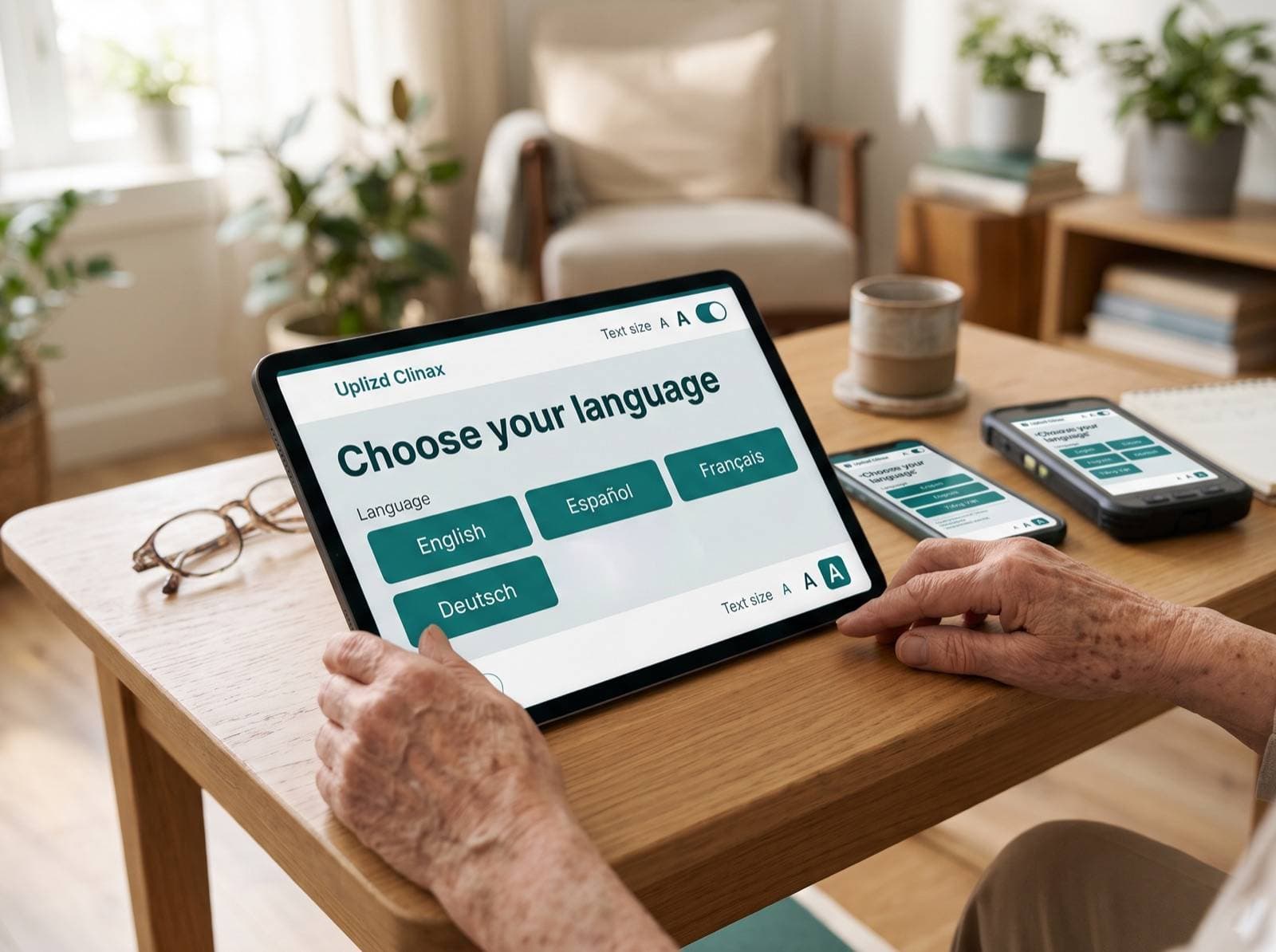
- Faithful electronic migration
Why teams bring in eCOA specialists
- 01
Licences take longer than expected
Many validated instruments belong to authors or publishers, and each sets its own terms for electronic use. Requests that start late can hold up the whole study build.
- 02
Every country needs its own version
A validated instrument needs linguistic validation in each language, not just a translator. Every language adds review rounds, and the owner may need to approve the result.
- 03
Moving from paper must not change the measure
Splitting a page across screens, changing a response scale or rewording an instruction can change how participants answer. Migration needs care, and a record of what changed and why.
- 04
Devices are a logistics project
When participants need a study device, someone has to set it up, ship it, replace it and get it back. That work is easy to underestimate until the first site asks.
Questionnaires ready on day one
- Licensing coordinated with instrument owners
- Managed translations per country
- Electronic versions checked against the original
- Devices shipped and supported
What's included
What we take on
- Licence requests to instrument owners, on your behalf
- Translation and linguistic validation management
- Electronic migration of paper instruments
- Screen review rounds with instrument owners where required
- eCOA forms and schedules set up in your study on Uplizd Clinax
- Device provisioning for participants who need one
What you receive
- Licence tracker for every instrument and language
- Migration record for each instrument
- Translated versions ready for review
- Screenshots for owner and ethics review
- Tested eCOA forms in the test environment
- Provisioned devices ready for sites or participants
What stays with you
- Choice of instruments and endpoints
- Licence agreements, held in your name
- Ethics and regulatory submissions
- Final approval of each electronic version
Two ways to work with us
Option one
We run eCOA for you
We take on licensing, translations, migration and devices from start-up to close-out. You approve each instrument and stay informed at every step.
- A named eCOA lead for your study
- Every task in the scope above
- One timeline for every instrument and language
- Device support for sites through the study
Best for: first eCOA studies, or studies with many instruments, languages or devices.
Option two
We build it and hand it over
We set up your first instruments, then train your team to manage licences, versions and schedules on Uplizd Clinax themselves.
- Tasks agreed one by one
- Approved instruments saved to a reusable form library
- Training for your eCOA and study teams
- Support on hand when you need it
Best for: teams planning several studies with the same instruments.
How we work with you
- 1Together
Plan
Agree instruments, languages, devices and the start-up timeline.
- 2Uplizd Clinax
License and translate
Request licences and manage translations with the instrument owners.
- 3Uplizd Clinax
Migrate and test
Build the electronic versions and test them in the test environment.
- 4Your team
Approve and go live
Review the screens, sign off each version and release it to sites.
Guided by published good practice
ISPOR ePRO
ePRO Good Research Practices Task Force
Recommendations on the evidence needed to show an electronic version measures the same thing as the paper original, scaled to how much the instrument changes.
ISPOR translation
Translation and cultural adaptation principles
Good practice for translating patient-reported outcome measures, from forward and back translation to cognitive debriefing and proofreading.
FDA PRO guidance
Patient-reported outcome measures (2009)
FDA guidance on using PRO measures to support labelling claims, including the expectation that changes such as a new mode of administration are supported by evidence.
21 CFR Part 11
US FDA — electronic records and signatures
Every create, change and delete is recorded with user, time and reason, and electronic signatures are bound to the person who signed.
Frequently asked questions
Do you hold licences for instruments?
No. Licences belong to the instrument owners and the agreements are in your name. We prepare and track the requests for you, and instruments are used under your licence.
How long do translations take?
It depends on the instrument, the number of languages and the owner's review process. We plan it into your start-up timeline from the first conversation.
Can participants use their own devices?
Yes. eCOA runs on participants' own devices or on devices we provide, and works offline. Provided devices are an option when your protocol or population needs them.
How do you keep the electronic version faithful?
We keep wording, response options and scoring as the owner intended, record every change from the paper layout, and ask the owner to review screens where they require it.
Can we reuse instruments in later studies?
Yes, within the terms of each licence. Approved versions are saved to a reusable form library, so later studies start from what you've already approved.
What if an instrument changes mid-study?
The new version is built and tested in the test environment, then released as a new form version — so you always know which version each participant answered.
Other services
Data management
Outsource cleaning, coding and database lock to a team that has run clinical data management for years.
Learn moreStudy build & validation
We turn your protocol into a tested, documented study build so you can go live with confidence.
Learn moreCustomer support
Help from people who understand clinical research, for sponsors, CROs and site staff alike.
Learn more