Every study type, one platform
- Interventional and observational
- Remote and hybrid
- Prospective and retrospective
Explore use cases
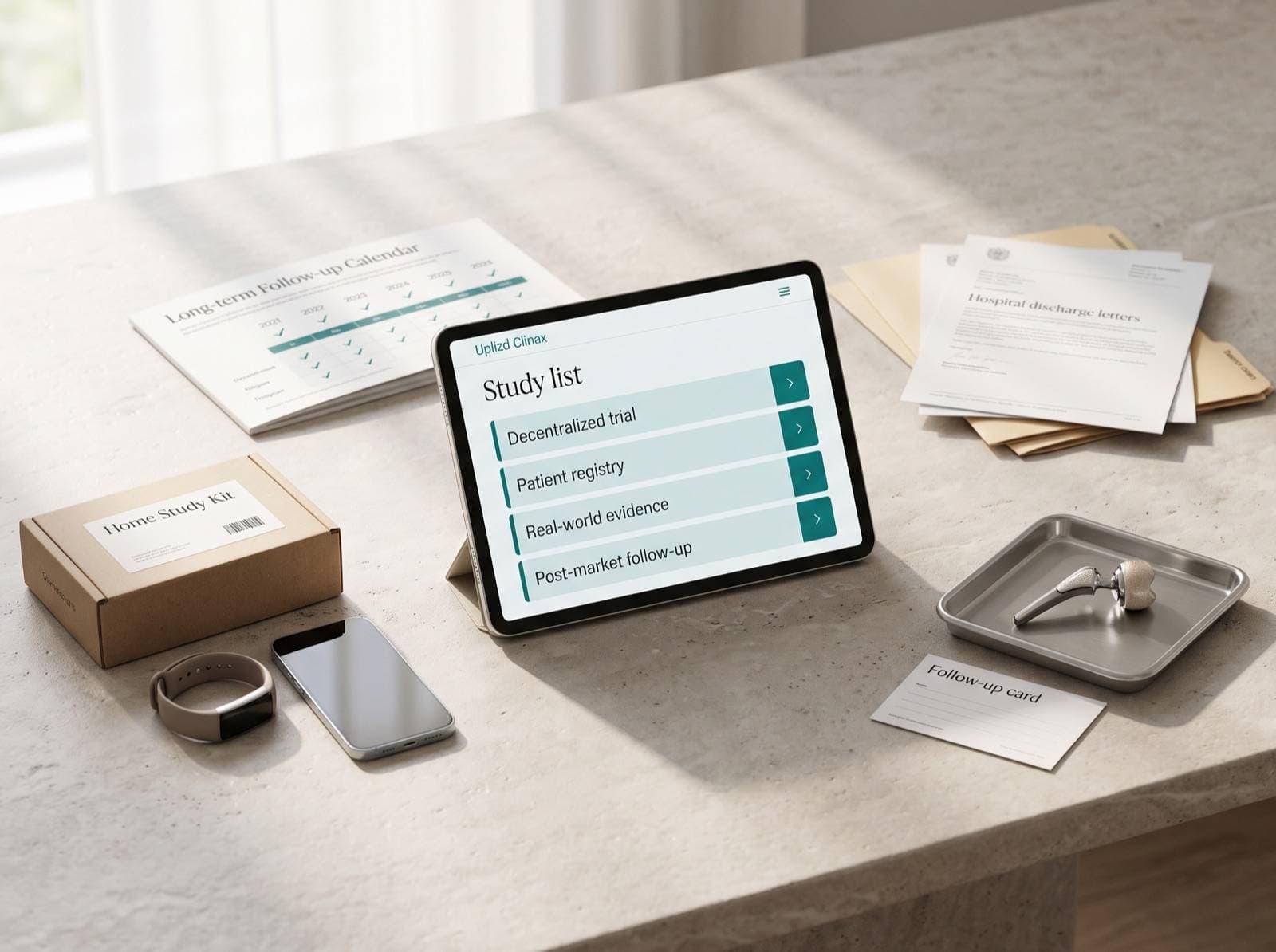
Decentralized & hybrid trials
Bring visits, consent and outcomes to participants at home.
Learn morePatient registries
Follow large cohorts for years with low site burden.
Learn moreReal-world evidence
Turn routine care data into regulatory-grade evidence.
Learn morePost-market follow-up
Run PMCF studies that keep devices on the market.
Learn moreHow the study types compare
Design
Interventional, hybrid or fully remote
Where the data comes from
Sites, participants' own phones, home devices and telehealth visits
Runs on
Design
Observational and open-ended, often for years
Where the data comes from
Sites, patient questionnaires and existing medical records
Runs on
Design
Observational, prospective or retrospective
Where the data comes from
Health records, clinic letters and patient-reported outcomes
Design
Post-market studies, surveys and registries for devices
Where the data comes from
Sites, device users, device data and published literature
Runs on
Mix study types without mixing systems
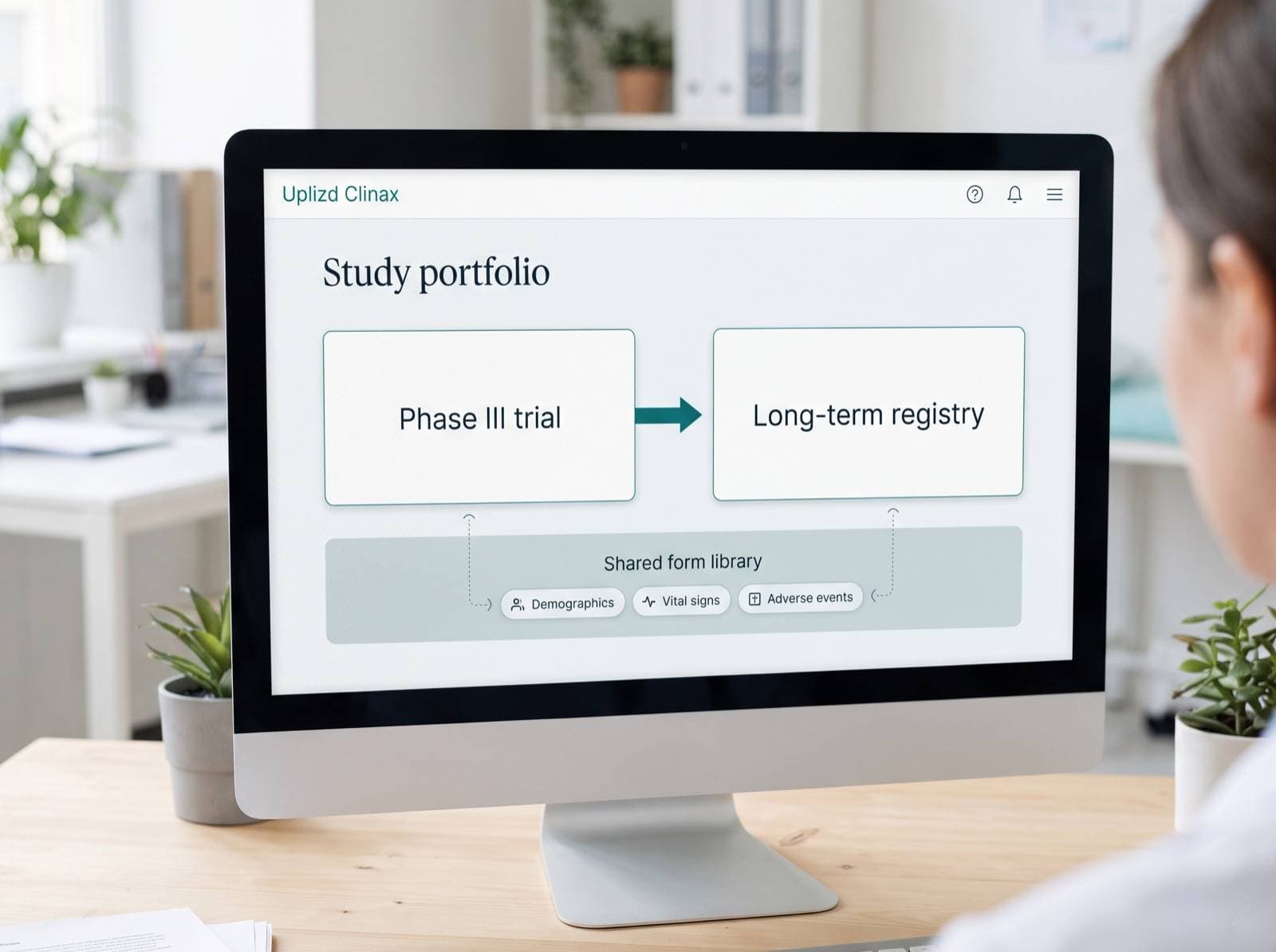
- One data model for every study type
- Reusable forms and outcome definitions
- Consistent exports for analysis
- One audit trail across studies
Shared by every study type
Reusable libraries
Forms, questionnaires and outcome definitions you can carry from one study to the next.
Participants at home
Remote consent and questionnaires on participants' own phones or provided devices, online or offline.
Records into data
AI proposes values from medical records and clinic letters, linked to the source passage, for a reviewer to approve.
Device and lab data
Readings and results imported into the subject record instead of typed in again.
Personal data protected
Role-based access to identifiable data and pseudonymised exports for analysis.
Open to your systems
EHR connections over FHIR R4 and HL7 v2, file imports and a REST API.
Frequently asked questions
Can we run different study types at the same time?
Yes. Each study is set up on its own, but they share the platform, your form libraries and your users, so a registry and a trial can run side by side.
Can a registry feed a later trial?
Registries and trials share one data model, so outcome definitions stay consistent. Talk to us about linking records between studies for your protocol.
Do you support retrospective studies?
Yes. AI Data Extraction proposes values from existing medical records for reviewers to approve, which suits retrospective chart review.
Do participants need a different app for each study?
No. Participants use one app for consent, questionnaires and reminders, whichever study they are in.
Don't see your study type?
These are the most common designs, not the only ones. Tell us about your protocol and we'll show you how it would run.